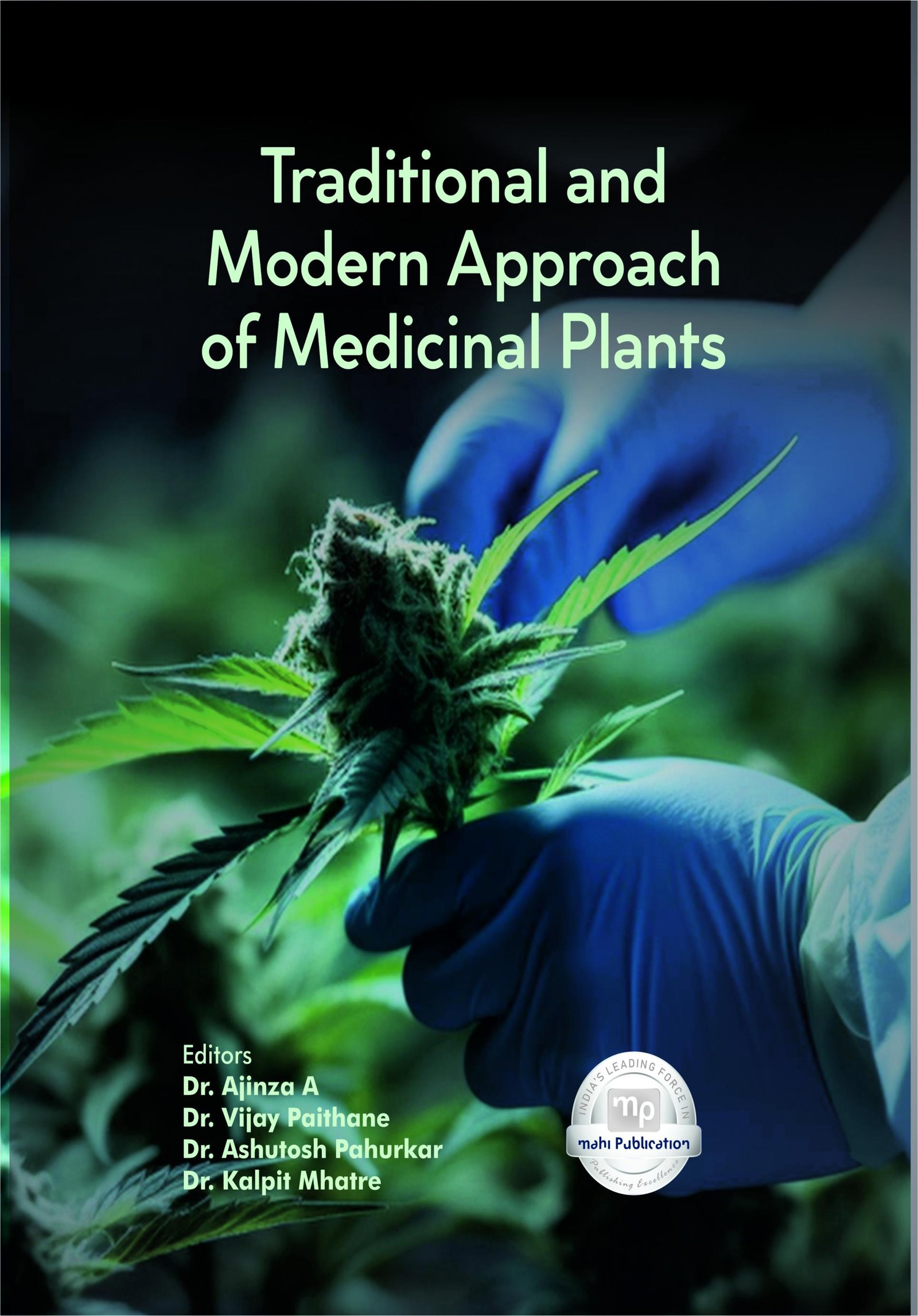
Traditional and Modern Approach of Medicinal Plants
Authors:
Dr. Ajinza A,
Dr. Vijay Ashruba Paithane,
Dr. Ashutosh Pahurkar,
Dr. Kalpit Mhatre,
Publish Date/ Year : August 2025 | Format: Paperback | Genre : Agriculture | Other Book Detail
Publish Date/ Year : August 2025 | Format: Paperback | Genre : Agriculture | Other Book Detail
Indian medicinal plants trace their origins back thousands of years, woven into the very fabric
of early civilization. The Vedas, especially the Rigveda and Atharvaveda, provide some of the
earliest recorded mentions of plants used for healing. This ancient knowledge evolved into
structured medical systems like Ayurveda, which elaborated on the medicinal uses of herbs in
both preventative and curative ways. Archaeological evidence from the Indus Valley Civilization
indicates the use of medicinal herbs in their ritual and domestic practices. The integration of plant
based remedies was not limited to medicine but extended to diet, spiritual practices, and seasonal
rituals. Plants were considered sacred entities with energies capable of balancing the human body
and mind. Over centuries, oral traditions preserved the names, uses, and preparations of these
herbs. Sage-physicians (rishis) and seers who practiced yoga and meditation documented this
knowledge meticulously in palm-leaf manuscripts and stone carvings. These records were not only
medical but also philosophical, viewing health as a harmonious relationship with nature. Thus,
medicinal plants formed the basis for a holistic healing tradition that encompassed body, mind,
and spirit. India’s climate and biodiversity further allowed for the cultivation and use of a wide
array of botanical resources. As trade flourished with neighboring regions, Indian medicinal plants
influenced systems in China, the Middle East, and Southeast Asia. Despite colonial disruptions,
this traditional knowledge persisted in rural and tribal areas, ensuring its survival to the present
day. Today, Indian medicinal plants are studied globally, not only for their bioactive compounds
but also for the traditional wisdom behind their use. This enduring legacy marks India as one of
the richest repositories of ethnobotanical heritage in the world
Pages
247 pages
247 pages
Language
English
English
Publication date
August 2025
August 2025
ISBN-13
978-93-6678-175-4
978-93-6678-175-4
Book Also Available On


Share: