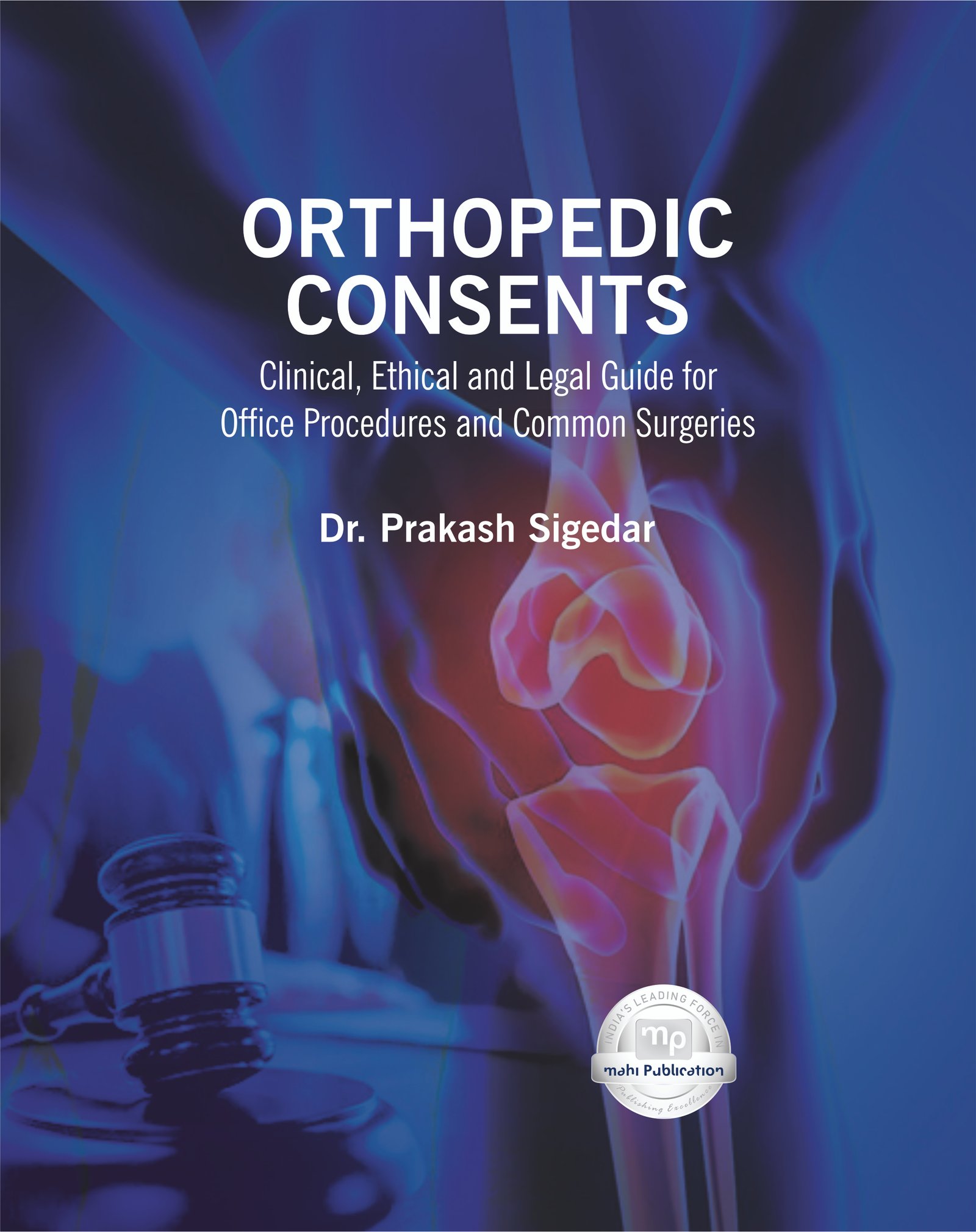
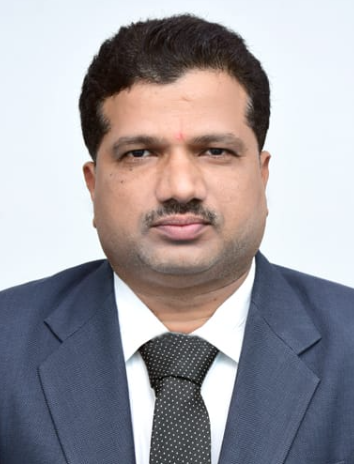
Dr. Prakash Sigedar
Dr. Prakash Sigedar is a distinguished consultant orthopedic surgeon based in Jalna,
Maharashtra, India. With over three decades of dedicated service in the field of orthopedics, Dr.
Sigedar has established himself as a pivotal figure in advancing musculoskeletal care, education,
and professional leadership in the region and beyond. His career, spanning from the year 1995 to
the present, reflects a profound commitment to clinical excellence, ethical practice, and the
dissemination of knowledge—qualities that are vividly embodied in his authorship of Orthopedic
Consents: Clinical, Ethical, and Legal Guide for Office Procedures and Common Surgeries. This
book, born from his extensive experience, serves as a practical resource for orthopedic
practitioners navigating the complexities of informed consent in an era of evolving medical
ethics and legal standards.
Dr. Sigedar's journey in orthopedics began in the mid nineties 1995 when he completed his
medical education and postgraduate training in orthopedics at prestigious institutions in
Maharashtra. Since establishing his practice in Jalna in the year 1997, he has built a reputation as
a compassionate clinician and innovative surgeon, specializing in trauma management, joint
replacement surgeries, and minimally invasive procedures. Over the past three decades, he has
performed thousands of surgeries, ranging from routine office-based interventions like
arthrocentesis and fracture reductions to complex operations such as total knee and hip
arthroplasties, spinal fixations, and deformity corrections. His clinical contributions have been
instrumental in improving access to high-quality orthopedic care in rural and semi-urban
Maharashtra, where he has pioneered the adoption of evidence-based techniques to address the
high burden of road traffic injuries, agricultural accidents, and degenerative joint diseases
prevalent in the region.
Beyond his clinical prowess, Dr. Sigedar has made significant strides in orthopedic education
and research. As a mentor to generations of residents and fellows, he has contributed to training
programs at local medical colleges and district hospitals, emphasizing hands-on skills, patient
safety, and ethical decision-making. In the last three decades, he has authored numerous articles
in national journals, including publications in the International, national and state level journals ,
covering topics such as infection control in joint surgeries, outcomes of fracture management in
resource-limited settings, and the role of multidisciplinary approaches in rehabilitation. His
research has often focused on practical challenges in Indian healthcare, such as optimizing
consent processes to reduce medico-legal disputes—a theme that directly informs his latest book.
Dr. Sigedar's work has been recognized through awards from the Indian Orthopaedic
Association, including commendations for his contributions to trauma care during public health
crises, such as the management of mass casualties and more recently during the COVID-19
pandemic.
A hallmark of Dr. Sigedar's career is his leadership within professional bodies. Serving as the
past Secretary of the Maharashtra Orthopaedic Association (MOA)—a position he held during a
transformative period in the 2017—he played a key role in organizing state-level conferences,
workshops, and CME programs that brought together over 2500 orthopedic surgeons annually.
Under his stewardship, the MOA advanced guidelines on ethical practices, including
standardized consent protocols for common procedures, which have influenced policy at both
state and national levels. His advocacy for patient rights and surgeon education has extended to
collaborations with the Indian Medical Association and the National Medical Commission,
where he has contributed to workshops on medico-legal aspects of surgery. These efforts
underscore his holistic approach to orthopedics, blending clinical innovation with a strong ethical
framework.
Dr. Sigedar's authorship of Orthopedic Consents is a natural culmination of his three-decade
legacy. Drawing from his frontline experiences in Jalna's diverse patient population—where
cultural, linguistic, and socioeconomic factors often complicate consent discussions—he offers a
guide that is not only clinically robust but also attuned to the Indian medico-legal context,
including insights from landmark cases like Samira Kohli v. Dr. Prabha Manchanda and
guidelines from the Medical Council of India. This book reflects his enduring passion for
empowering surgeons to foster trust-based patient relationships, thereby enhancing outcomes and
mitigating risks in office procedures and common surgeries.
In an orthopedic landscape that has seen remarkable advancements—from the integration of
arthroscopic techniques in the 1995 to robotic-assisted surgeries today—Dr. Sigedar's
contributions stand as a testament to the importance of grounded, ethical practice. His work
continues to inspire the next generation of orthopedic professionals in Maharashtra and across
India, ensuring that patient-centered care remains at the heart of the specialty.