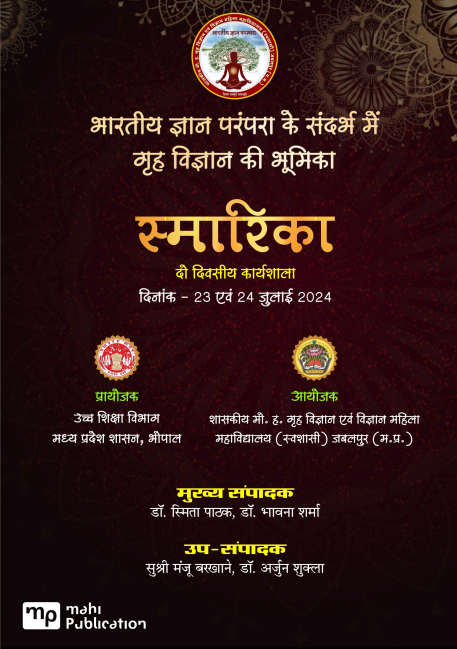
Bhaarateey Jaan Parampara Ke Sandarbh Mein Grh Vigyaan Kee Bhoomika
Authors:
Dr. Smita Pathak,
Dr. Bhavana Sharma,
Ms. Manju Barkhane,
Dr. Arjun Shukla,
Publish Date/ Year : October 2024 | Format: Paperback | Genre : Ayurved | Other Book Detail
Publish Date/ Year : October 2024 | Format: Paperback | Genre : Ayurved | Other Book Detail
The conventional food of Chhattisgarh, an area in focal India, contains high levels of these
bioactive compounds because of the utilization of nearby and unadulterated segments. The
food habits in Chhattisgarh are enriched with nutritional food like millets, lentils and green
leaves and the methods used for cooking are healthy. This dietary pattern provides a good
chance to investigate the existence and potential advantages of functional foods in terms of
culturally and geographically appropriate tradition. Functional foods are defined as those
components found in foods that contain nutrients that help to enhance health beyond their
nutritional value; they have received the attention of the scientific fraternity because of their
efficiency in the prevention and management of chronic diseases. Sorghum, Pearl millet etc.,
are the popular millets in Chhattisgarh and are rich in dietary fiber, phenolic acids and
flavonoids [1]. These compounds have remarkably high antioxidant and anti-inflammatory
activity which allows to manage the levels of oxidative stress and regulate the inflammation
which is the root cause of chronic diseases [2]. Likewise, Lens culinaris or lentils are also a
source of polyphenols such as flavonoids and tannins with antioxidant and anticarcinogenic
properties. The nutrients found in these foods are not only beneficial to metabolic health but
also have a therapeutic role in the prevention of chronic diseases, and this underlines the
value of traditional diets in today’s nutrition. [3]. Central Indian food preparation techniques
especially those used in Chhattisgarh (CG) and Madhya Pradesh (MP) are as diverse as the
region’s culture with a focus on taste and nutritional content. In contrast to many other parts
of the world where the process of modernization of the diet entails the consumption of a lot
of processed foods, the foods consumed in central India are prepared by cooking techniques
that improve the bioavailability of the nutrients. Techniques like steaming, boiling, and slow
cooking are common where the nutrient content of the millets, lentils, and indigenous
vegetables is retained[4]. On the other hand, states such as Punjab, Gujarat and Maharashtra
use frying and generous amounts of oil in their cooking which causes nutrient degradation
due to oxidation. On the other hand, the cooking procedures preferred in CG and MP do not
cause loss of nutrients and help in the preservation of vitamins, minerals, and phytochemicals
crucial for well-being. The CG and MP traditional diets are based on the locally available
food items, which comprise high fibre millets like jowar and bajra, and green leafy vegetables
like methi and saag containing vitamins and minerals. These ingredients apart from being
sources of nutrients contain unique flavors that when used in combination with natural spices
and herbs make meals healthy and tasty, this supports the culinary and nutritional variety.
Pages
211 pages
211 pages
Language
English
English
Publication date
October 2024
October 2024
ISBN-13
978-93-6678-396-3
978-93-6678-396-3
Book Also Available On


Share: